Let’s be honest: mixing politics and sports usually feels like trying to blend oil and water while someone screams at you through a megaphone. But whether you are a die-hard football fan, a fantasy league champion, or a savvy investor, understanding the us midterm elections impact on sports is absolutely essential this year. The recent 2026 elections didn’t just decide who gets to sit in fancy Washington offices; they drastically altered the financial and legal playbook of the games we love.
Here is everything you need to know about how the midterms are rewriting the rules for athletes, fans, and franchise owners.
📢 SPONSORED: Democrats cap
Baseball Caps for Men & Women Embroidered Democrat A Embroidery Ladies & Men Baseball Hats Acrylic
Hat Form Type
Baseball Cap
Color
Dark Grey Design Only
Theme
Countries
Occasion Type
Anniversary, Birthday, Christmas, Father’s Day, New Year
College Sports in Limbo: The Fate of the Protect College Sports Act
If there is one thing the NCAA loves more than keeping its money, it is asking Congress to save it from antitrust lawsuits. Enter the Protect College Sports Act (PCSA). This bill aims to cap revenue sharing and grant the NCAA a much-needed legal shield. The Senate already passed this sweeping college sports bill on athlete pay and transfers by a vote of 77-22.
However, the us midterm elections impact on sports is hitting this legislation hard. With Democrats projected to flip the House of Representatives, the Republican-led lame-duck House has a frantic five-week window to pass the bill before the new Congress takes over on January 3, 2027. House Minority Leader Hakeem Jeffries and the Congressional Black Caucus strongly oppose the bill, arguing it unfairly limits the earning potential of minority student-athletes.
Meanwhile, the National College Players Association has filed unfair labor practice charges to classify college athletes as actual employees. Without swift congressional intervention, college sports could look exactly like NFL free agency by next season.
While Washington bickers, state governors and legislatures are deciding the fate of high school Name, Image, and Likeness (NIL) money. Currently, 45 states allow some form of high school NIL.
But the rules are a confusing, messy patchwork. A local car dealership commercial that is perfectly legal for a 17-year-old quarterback in Georgia might cost a student their athletic eligibility in Hawaii. As new state lawmakers take office post-midterms, expect heavy lobbying from angry booster clubs begging to deregulate these laws so their local high school star doesn’t transfer across state lines to cash in.
Analyzing the US Midterm Elections Impact on Sports Betting
The sports betting boom finally hit a massive speed bump at the ballot box. If you want to see the most direct us midterm elections impact on sports, look no further than how voters handled gambling expansion and regulation.
Here is a quick breakdown of how the landscape shifted before and after election day:
Policy Area
Pre-Election Status
Post-Election Impact
College Athlete Pay
Senate passed PCSA bill 77-22.
Lame-duck House faces a tight 5-week window to pass it before Democrats take over.
Sports Betting Expansion
Rapid, unchecked state-by-state legalization.
Voters push back: Nebraska rejects mobile betting 54-46.
Prediction Markets
Polymarket & Kalshi face CFTC bans.
Election betting hits $1.4B; incoming administration signals support for legalizing event swaps.
Stadium Subsidies
Bipartisan legislative approvals for billionaire owners.
Direct democracy strikes back: Voters increasingly reject stadium ballot referendums.
In Nebraska, voters explicitly rejected a ballot measure to legalize mobile sports betting by a 54–46 margin. Despite major sportsbooks outspending the opposition by an absurd 20-to-1 ratio, a coalition of former football coaches successfully convinced voters that the societal costs weren’t worth the tax revenue.
At the federal level, lawmakers are pushing the SAFE Bet Act. This landmark legislation aims to ban sports betting advertisements during live sporting events (so you can finally watch a fourth quarter without a celebrity shouting about “risk-free parlays”). It would also outright ban the use of credit cards to fund gambling accounts.
The Rise of Prediction Markets and Player Protection
If you thought betting on the Super Bowl was wild, welcome to the financialization of democracy. Americans staked more than $1.4 billion on prediction markets tied to the outcome of the midterm elections. This has sparked a massive legal turf war between the federal Commodity Futures Trading Commission (CFTC) and state regulators.
With all this micro-betting comes a darker side: angry bettors harassing athletes online. Recognizing this threat, North America’s five major professional sports leagues (the NFL, NBA, MLB, NHL, and MLS) issued a joint demand to state regulators. They want a strict “reciprocal exclusion” rule: if a bettor sends a violent threat and gets banned from a sportsbook in one state, they should be automatically banned across all platforms nationwide.
Public Stadium Funding: Billionaires vs. Taxpayers
Understanding the full scope of this topic means looking at how billionaires fund their stadiums. If there is one thing sports owners love, it is convincing taxpayers to foot the bill for their shiny new arenas. Owners typically secure these subsidies by donating millions to both Republican and Democratic campaigns, brilliantly insulating themselves from midterm volatility.
However, when stadium funding is removed from the pockets of politicians and put directly on the ballot, citizens often reject it. For example, voters in Jackson County, Missouri, decisively defeated a sales tax measure meant to fund stadium improvements for the Kansas City Chiefs and Royals. It turns out that direct democracy is the biggest threat to corporate sports welfare.
Conclusion
The us midterm elections impact on sports proves that the games we love do not exist in a vacuum. From the precarious legal status of college athletes and the explosion of prediction markets, to the battle over taxpayer-funded stadiums and sports betting ads, the ballot box truly dictates the future of the industry.
As we look toward the new legislative sessions in 2027, one thing is certain: the rules of the game are changing rapidly, and both fans and franchise owners will need to adapt. Keep your eyes on the legislature, and maybe hold off on that massive parlay until the dust settles!
What are your thoughts on the government’s role in sports? Should Congress step in to save the NCAA, or let the free market decide? Let us know in the comments below!
मोहम्मद आमिर का टेस्ट से संन्यास- पाकिस्तान के बाएं हाथ के तेज गेंदबाज मोहम्मद आमिर ने हाल ही में टेस्ट क्रिकेट से संन्यास लेने की घोषणा की है| मोहम्मद आमिर का टेस्ट से संन्यास लेने के पीछे का कारण बताते हुए उन्होंने कहा कि वो अब सफ़ेद गेंद ( वनडे और टी-20 फॉर्मेट) पर ध्यान केन्द्रित…
RR vs DC live score, 9th Match IPL 2024: head to head, live telecast & streaming, squad, dream11: The ninth match of IPL 2024 promises to be a fiery encounter as the Rajasthan Royals, currently riding high after their convincing win against Lucknow Super Giants, take on the Delhi Capitals, who are eager to bounce…
Road safety world series 2021 Most runs: वर्तमान में सभी देशों के लीजेंड के बीच रोड सेफ्टी वर्ल्ड सीरीज खेली जा रही है. जिसमें सचिन, सहवाग जैसे दिग्गज बल्लेबाज अपना जलवा दिखा रहे है. इस सीरीज में भारतीय लीजेंड (India Legend) अब तक अपना दबदबा बनाए हुए हैं. यही वजह है कि वह वह पॉइंट…
महिला आईपीएल 2023 मीडिया राईट (Women IPL 2023 Media Rights): 951 करोड़ में बिके मीडिया राइट्स | WIPL 2023 Media rights – BCCI ने हाल ही में महिला आईपीएल 2023 मीडिया राईट के लिए हाल ही में बोली का आयोजन किया. जिसमें Disney+ Hotstar और viacom18 ने बाजी मार ली. BCCI ने महिला आईपीएल 2023…
IPL 2023 GT vs CSK लाइव प्रसारण: गुजरात टाइटन्स vs चेन्नई सुपर किंग्स लाइव प्रसारण, मैच टाइम, वेन्यू, हेड टू हेड रिकॉर्ड, प्लेयिंग और Best Dream11 टीम – आईपीएल 2023 का आगाज 31 मार्च से भारतीय समयानुसार शाम 7:30 बजे से होगा, जिसके लिए ठीक 7 बजे टॉस किया जाएगा. आईपीएल के उद्घाटन मैच में…
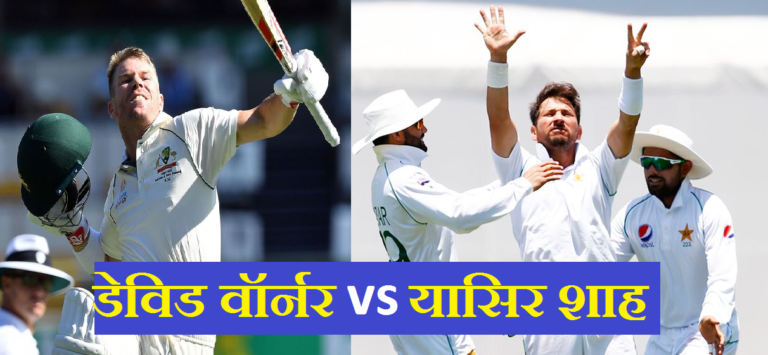
पाकिस्तान की टीम इस समय ऑस्ट्रेलिया दौरे पर है, जहाँ दोनों टीमों के बीच 2 मैचों की टेस्ट सीरीज खेली जा रही है| यह सीरीज पाकिस्तान गेंदबाज यासिर शाह के लिए किसी बुरे सपने से कम नहीं है| दूसरे टेस्ट की दूसरी पारी से पहले तक यासिर 400 रनों पर 4 विकेट लेकर सबसे ख़राब…